Inside the first Altus Innovation Summit in Paris
The first Altus Innovation Summit in Paris explored how AI, trusted calculation engines and purpose-built CRE tools are influencing the way professionals work.
Inside the first Altus Innovation Summit in Paris
The first Altus Innovation Summit in Paris explored how AI, trusted calculation engines and purpose-built CRE tools are influencing the way professionals work.
Author

Altus Group
Key highlights
General-purpose AI and specialised CRE tools are partners rather than competitors, with the lasting advantage of purpose-built solutions lying in proprietary data and trusted calculation engines no generalist model can replicate
Reliable data, sound method, and human accountability are the foundations that determine whether an AI output can be defended in front of a client or investment committee
ARGUS Workbook by Forbury brings enterprise-grade calculation to a familiar spreadsheet interface, with the same engine underpinning both ARGUS Workbook and ARGUS, ensuring identical valuation results across either platform
Work that once took an analyst a day - updating a valuation, running a sensitivity analysis, and comparing models - now runs in seconds through ARGUS Assist's conversational interface
Altus Group held its first Innovation Summit in Paris on June 16th. Much like Altus Connect, the event gave industry leaders a chance to exchange ideas about the role artificial intelligence now plays in CRE, and how to move from early experimentation to results teams can reproduce and defend.
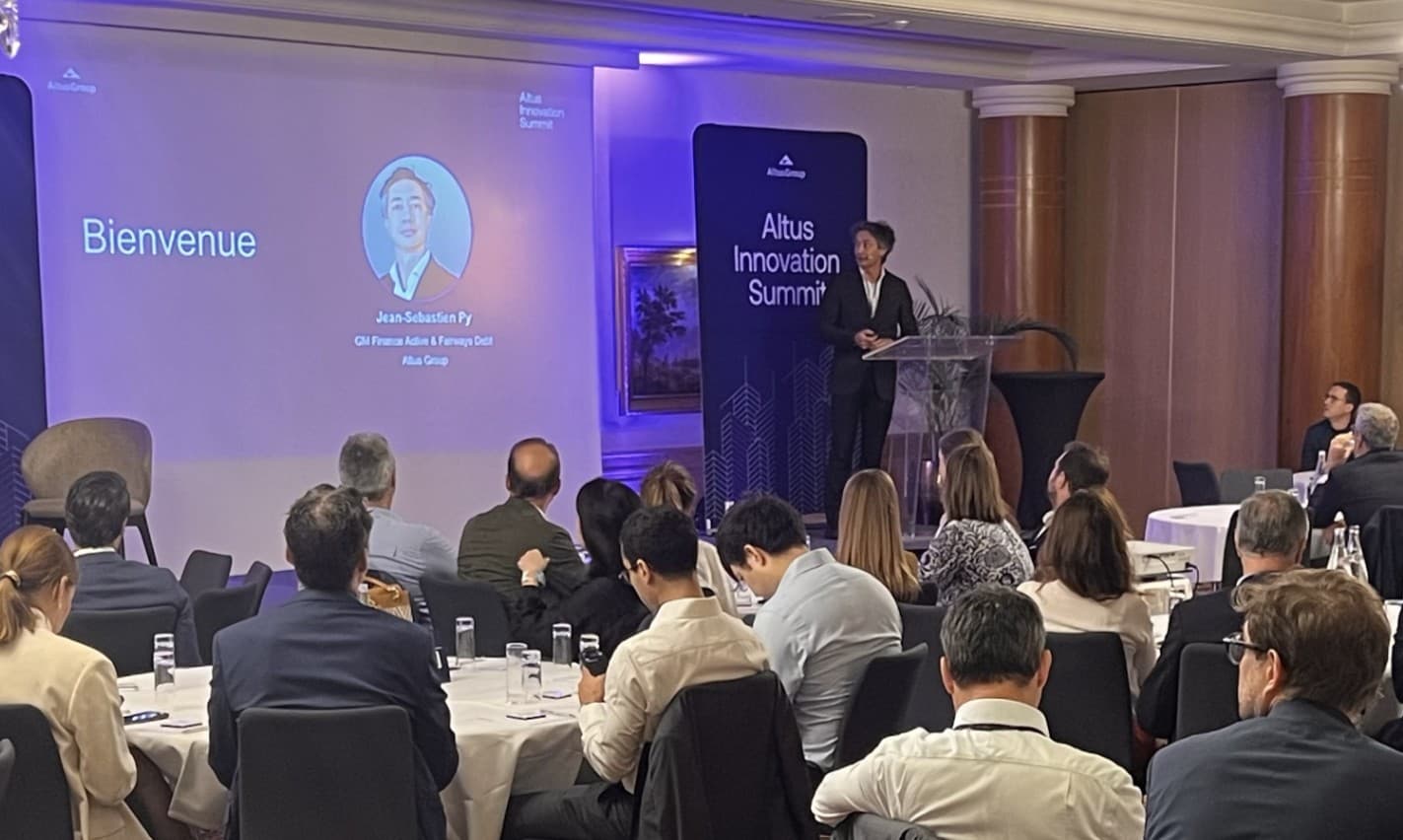
Jean-Sébastien Py, GM of Finance Active and Fairways Debt at Altus Group, set the scene: the industry has reached a point where the best ideas come from working through problems with the people who live them. Altus came to that conversation as both an active listener and an experienced guide, a firm that has spent years grappling with the same questions and has already built answers into the tools the industry relies on. What followed moved from a wide view of where AI stands to how that thinking is being put into practice inside the platforms that valuers, asset managers, and investors use every day.
Jean-Sébastien Py, GM of Finance Active and Fairways Debt at Altus Group welcoming the Altus Innovation Summit participants
The keynote: Where does AI stand?
Vincent Pavanello, co-founder of Mister AI, a French firm specialising in generative AI consulting and training, opened by challenging a common assumption. The belief that real estate lags other sectors in AI adoption is, in his mind, backward. Instead, he argued that no set of professional tools in recent memory has spread this quickly.
He walked through the scale of recent tech proliferation, then turned to the question he suggested mattered most for the room. In a world where powerful, general-purpose models can handle a growing share of everyday tasks, where do specialised tools fit? General-purpose models handle a broad range of everyday tasks well: drafting communications, summarising documents, researching market context. But when the work requires precision, consistency and outputs that can be defended in front of a client or investment committee, a different approach is needed. "The real challenge is understanding what, in the tools you use, a general-purpose model simply can't replicate," Vincent said. For those tasks, the tool needs to be purpose-built; a specialised tool like ARGUS Assist contributes what no general model can: proprietary data and a trusted, domain-specific calculation engine built specifically for CRE.
His advice to buyers follows from that distinction: start with a powerful, secure general-purpose tool, then equip and train teams to use it well, and be deliberate about which specialised tools they adopt alongside it for the work that requires more.
Vincent Pavanello, co-founder of Mister AI delivering a keynote on artificial intelligence
ARGUS Workbook by Forbury
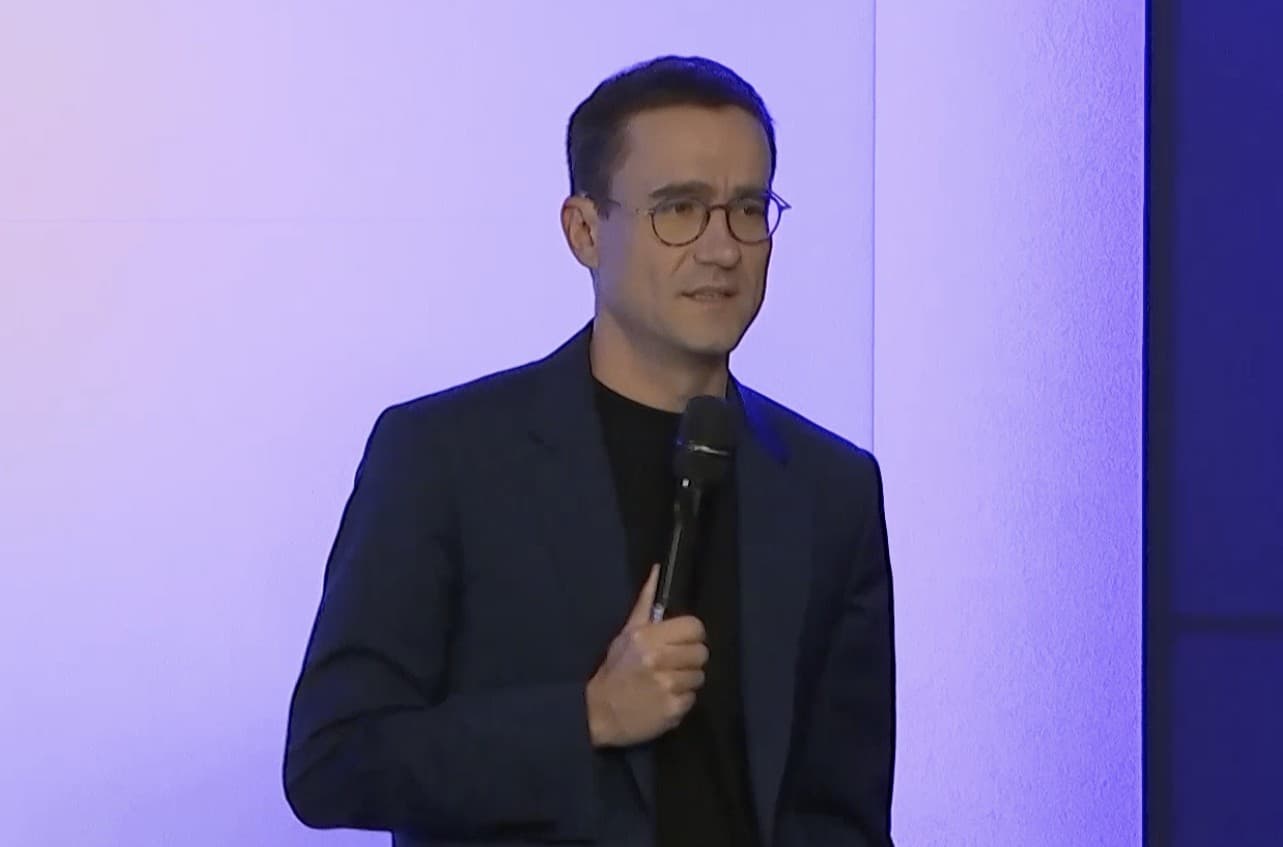
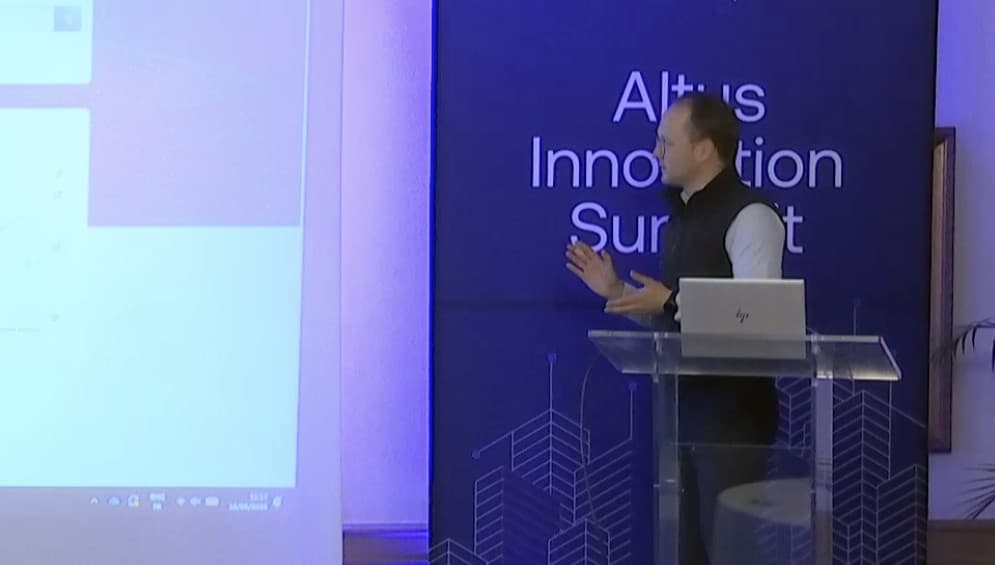
For firms looking to extend enterprise-grade valuation capability without overhauling existing workflows, Benoît Desmarest, Solutions Engineer at Altus Group, introduced ARGUS Workbook by Forbury, which keeps a spreadsheet interface that users already know but sends its calculations to the cloud to run on the same engine as ARGUS. Because both tools share that engine, the same valuation returns identical results in either one. An embedded import tool ingests tenancy schedules straight from a PDF or spreadsheet and maps it into the model, sparing much of the manual re-keying. The same import capability can later be used to bring in actuals and track performance against the original model, extending its use from acquisition screening into ongoing business planning. Forbury, acquired by Altus in 2023, was already the market leader in Australia and New Zealand; the team has since adapted ARGUS Workbook by Forbury for the French and German markets, collaborating with local practitioners to create a strong solution fit.
Benoît Desmarest, Solutions Engineer at Altus Group, introduced ARGUS Workbook by Forbury
What it takes to make AI work
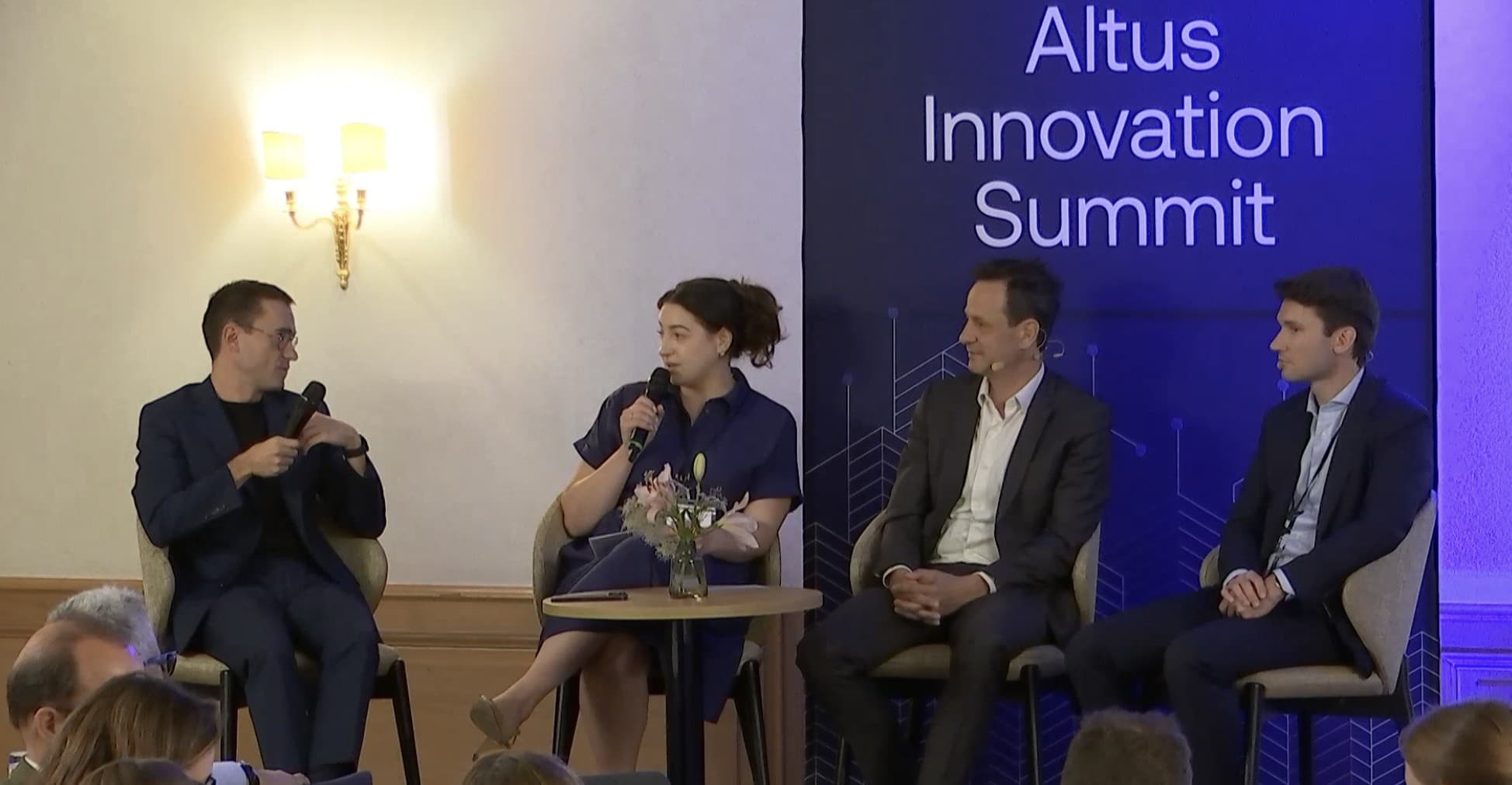
The next panel, moderated by Daniela Dragoi of Altus, brought together Vincent Pavanello; Nicolas Le Goff, who leads Altus's valuation advisory business across EMEA; and Jean-Philippe Carmarans, who heads valuation advisory at Cushman & Wakefield in France.
A year ago, the question on everyone’s mind was whether AI could be used in CRE at all. Today, Daniela noted, it is about how to use it well. In an industry built on trust, "if you can't explain it, you can't defend it."
In the discussion that followed, three themes emerged. The first was foundations: reliable data and sound method. AI makes mistakes, the panel agreed, but far fewer than it once did, and precise prompting, cited sources, and human review keep those errors in check. More data is not automatically better, though; the real advantage lies in choosing the right data. Proprietary appraisal data, in particular, was singled out as a particularly potent data source. And whatever the tool, accountability must remain with a person; someone must stand behind every decision.
The second theme was adoption. Tools coming onto the market may be better and faster than legacy solutions, but they need support to take hold, and the panel was candid that staff often reach for their own AI tools alongside the official ones. Whether individual productivity gains add up to organizational ones is still up for debate. "If everyone doubles their productivity except the person doing the very last task, a deal still takes just as long," Vincent pointed out, noting that the real constraint is often the investment committee that still meets once a month, not the analyst's speed.
The third theme was governance. Jean-Philippe was candid that AI is freeing creativity within the company, as you can achieve great innovations more simply and efficiently, bearing in mind that confidentiality rules need to be strict and tools formally approved before broad deployment. But to benefit from this creativity boost, you have to let it run free, as long as it's properly governed," he said, noting that the goal is a framework that captures the best ideas and gets them deployed, not one that stops them from being tried in the first place.
A panel discussion panel moderated by Daniela Dragoi of Altus, with Vincent Pavanello of Mister AI; Nicolas Le Goff of Altus; and Jean-Philippe Carmarans, Cushman & Wakefield
The platform in action
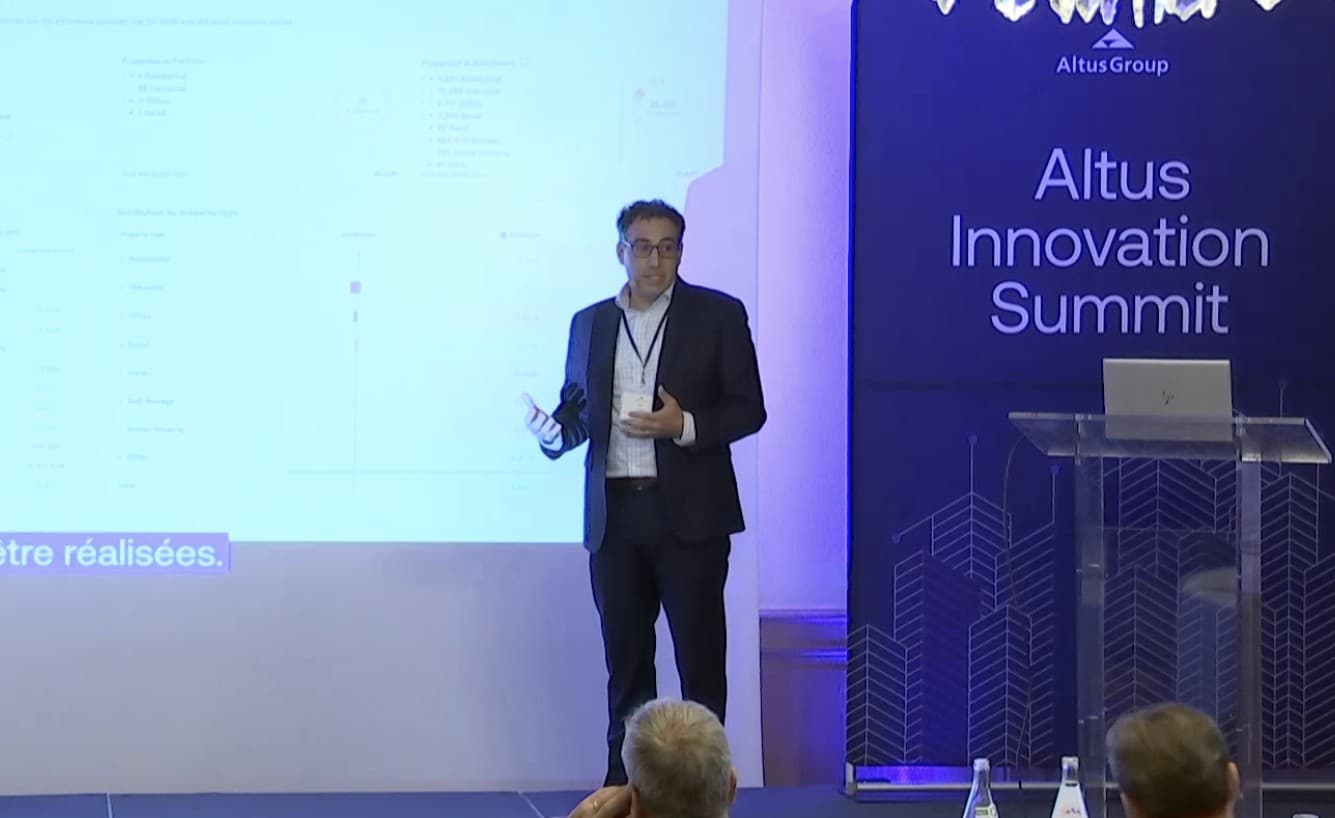
Benoît Desmarest, Charlotte Boncour, and Matt LaHood demonstrated ARGUS Intelligence live, showing how its modules work as a connected whole. Everything modelled in ARGUS Workbook flowing into the platform automatically with Asset Manager and Portfolio Manager pulling in each asset as it was built, alongside a new Tenant Analysis feature that untangles inconsistently named tenants to reveal true portfolio exposure. Charlotte previewed Investment Manager, the platform’s fund-level consolidation module, due in early 2027, with an early-adopter programme already open. Matt closed with Benchmark Manager and a demonstration of ARGUS Assist, the platform’s conversational agentic AI layer. Where traditional platform workflows require a user to know which module to open, which field to update, and how to re-run the model, ARGUS Assist replaces that sequence with a conversation: describe what you need, and the agent handles the task. From a single prompt, it updated a valuation, ran a sensitivity analysis, and compared models. Work that once took an analyst a day was done in seconds.
Matt LaHood demonstrated ARGUS Assist
The conversation continues
The summit closed with an invitation to share feedback and to join the EMEA Benchmark Manager Early Access Programme, described by the team as the start of an ongoing conversation with the industry. That conversation continues in London on September 17th, where Altus hosts its next Innovation Summit at Pan Pacific London. For those who missed Paris or want to go deeper on how firms are building confidence in an AI-enabled market, registration is open now.
Frequently asked questions
What is agentic AI and how is it being applied in commercial real estate?
Agentic AI refers to AI that can take action, not just answer questions. Rather than responding to a single prompt, an agentic system can receive an instruction, break it into steps, and execute each one autonomously. In CRE, this means a tool like ARGUS Assist can receive a natural language prompt and autonomously handle multi-step tasks: updating valuations, running sensitivity analyses, and comparing models based on ARGUS methodology; all without the user needing to know which module to open or which field to update.
How does ARGUS Workbook by Forbury differ from ARGUS?
ARGUS Workbook by Forbury retains a spreadsheet interface familiar to most users while sending its calculations to the cloud to run on the same engine as ARGUS. Because both tools share that engine, the same valuation returns identical results in either platform, allowing firms to extend enterprise-grade rigour to teams who prefer a lighter interface.
What does the panel's discussion on AI adoption reveal about organizational productivity?
Individual productivity gains do not automatically translate into organizational ones. As one panellist noted, if everyone doubles their productivity except the person handling the final task, a deal still takes just as long. The real constraint is often structural, for example, a committee that meets once a month versus the speed of any individual analyst. How productivity is defined and measured will vary by organization, and firms should establish their own benchmarks before evaluating AI’s impact.
What governance framework did the panel recommend for AI deployment in CRE?
The panel's position was that confidentiality rules must be strict and tools formally approved before broad deployment, but that overcorrection carries its own cost. The goal is a framework that captures the best ideas and gets them deployed, not one that prevents them from being tried. Creativity and governance can coexist.
Want to be notified of our new and relevant CRE content, articles and events?
Resources
Latest insights