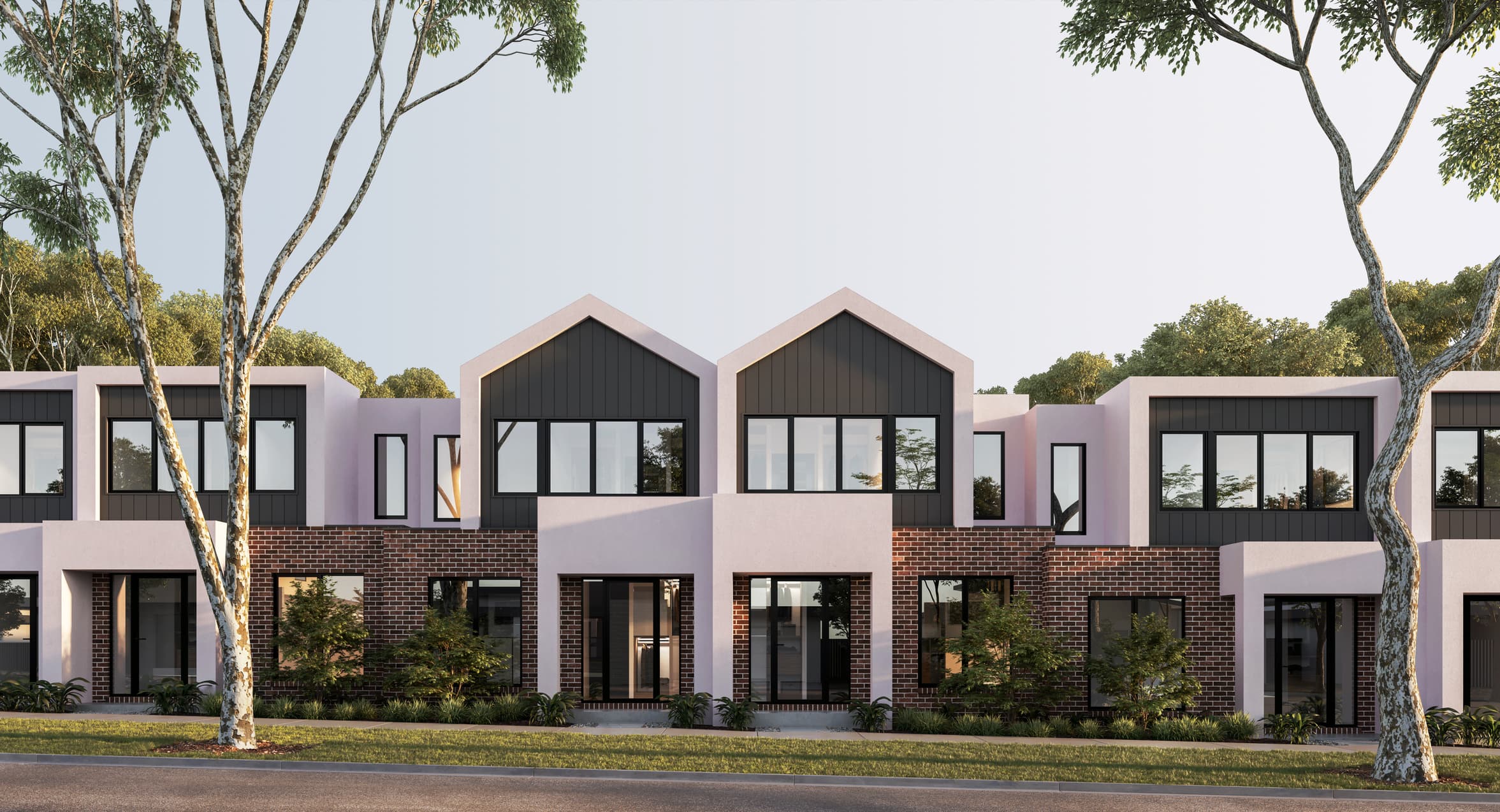
Australian land lease communities: The location paradox
Land lease communities promise home sales and recurring site fees. What if the land that makes the numbers work is where downsizers don’t want to live?
Australian land lease communities: The location paradox
Land lease communities promise home sales and recurring site fees. What if the land that makes the numbers work is where downsizers don’t want to live?
Author

Tim Peisley
Senior Trainer
Highlights
Land lease communities offer two sources of return, but strong operating margins don’t guarantee profitable developments
Affordable land and desirable locations can be difficult to reconcile, particularly when downsizers want to remain connected to family and familiar services
Feasibility is a game of consequences: cheaper land, higher site fees or faster construction can each undermine returns if developers fail to model the knock-on effects
Land lease communities are a bright spot in Australia’s otherwise bleak residential property market, tapping into a generation of homeowners with substantial housing equity and an appetite for downsizing.
The proposition is straightforward: sell the family home, buy a smaller, lower-maintenance property and, potentially, pocket a substantial sum. Consider the numbers:
51,000 operating sites across Australia and another 30,000–35,000 in development.
55% of developed sites are controlled by the five largest operators, with growing interest from institutional capital.
7.1 million Australians will be aged 65 or over by 2045–46, up from five million in 2026.
68% of Australians aged 65+ own their homes outright, providing a substantial pool of housing equity.
$232,000 in average equity released by homeowners moving into communities, according to some operators.
Up to 9 in 10 residents are rightsizing from local family homes.
60–70% operating margins are targeted by some major operators for established communities.
Taken together, these numbers suggest a market with considerable potential. But there’s a problem no amount of demographic growth or institutional capital can solve.
Developers need affordable land. Downsizers want affordable homes. Unfortunately, affordable land isn’t necessarily where downsizers want to live.
It’s a paradox that explains why the apparently simple economics of land lease communities are considerably more complicated than they first seem.
Two businesses for the price of one
For developers, part of the attraction of the land lease model is the opportunity to make money twice: first by selling the homes, then by collecting ongoing rent from the land beneath them.
Both returns depend on getting the location right. Developers need land they can afford, with enough room for homes, infrastructure and shared amenities. Buyers want an affordable home, but not necessarily at the expense of the people, places and services they know.
Large, affordable parcels of land are increasingly difficult to find close to established communities, healthcare, transport and other amenities. Yet 11% of downsizers are seeking a treechange or seachange, according to recent research from realestate.com.au, while 47% prioritise proximity to healthcare.viii
Ageing Australia’s 2026 research offers further food for thought: 67% of older Australians surveyed said affordability in their preferred location was the biggest barrier to downsizing, while 57% cited a lack of suitable homes in those locations. Emotional attachment to the family home was another significant obstacle, noted by 64%.ix
For downsizers, the calculation isn’t simply the difference between the price of their family home and their new one.
For developers, the challenge is finding the point where affordability meets aspiration.
What are downsizers really buying?
The attraction for downsizers | What developers must get right |
Unlocking equity | Offer a compelling price gap |
No direct council rates | Balance rates and cost recovery |
Stamp duty savings | Understand applicable duty rules |
Less maintenance | Keep upkeep affordable |
Resort-style amenities | Build what residents will use |
A ready-made community | Prioritise location and connection |
A home they can resell | Protect long-term resale appeal |
Commonwealth Rent Assistance | Factor in eligibility and affordability |
Could five designs beat fifty?
If developers can’t always reduce land costs, can they rethink what they build?
Land lease communities lend themselves to standardisation. Instead of dozens of bespoke homes, why not five or six designs, repeated across a development?
Modular construction and prefabrication can sharpen the business case. Housing Australia suggests modular methods can cut onsite construction time by up to 50%, while improving labour productivity through factory-based production.x
The savings aren’t guaranteed, though. Transport, installation and site preparation can eat into margins, while standardised designs must still appeal to buyers with different budgets and expectations.
And building homes faster is no advantage if nobody wants to buy them.
When the numbers work against each other
A land lease development isn’t simply a residential project with a different ownership structure. It’s a property development and a long-term operating business rolled into one.
This means feasibility is a balancing act.
Build too much infrastructure too early and capital sits idle; build too little and the community struggles to attract buyers.
Set site fees too high and homes become harder to sell; too low and the retained asset loses value. Cheaper land may mean slower sales, while faster construction can leave more homes unsold. The consequences can compound – so the trick isn’t just to model each risk, but to understand how they interact.
What happens if cheaper land saves $5 million upfront but adds a year to the sales program? Could higher site fees increase the value of the retained asset on paper, but slow home sales enough to undermine the development’s overall return? And would accelerating construction improve returns or simply increase the cost of holding unsold homes?
Altus Group’s ARGUS EstateMaster can help developers test these scenarios, compare their impact on cash flow and profitability, and track financial performance as projects move through delivery.
Established operators have demonstrated that land lease communities can be successful. But developers considering their first community shouldn’t start with the operating margin of a mature asset. They should start with three questions:
Can I afford the land?
Can my customers afford the homes?
Will they want to live there?
Because a development that looks irresistible on a spreadsheet is worth very little if nobody wants to call it home.

Accelerate your strategic technology initiatives
Gain the support you need to continually innovate, define your competitive advantage and scale your business for success.
Want to be notified of our new and relevant CRE content, articles and events?
Disclaimer
This publication has been prepared for general guidance on matters of interest only and does not constitute professional advice or services of Altus Group, its affiliates and its related entities (collectively “Altus Group”). You should not act upon the information contained in this publication without obtaining specific professional advice.
A number of factors may influence the performance of the commercial real estate market, including regulatory conditions and economic factors such as interest rate fluctuations, inflation, changing investor sentiment, and shifts in tenant demand or occupancy trends. We strongly recommend that you consult with a qualified professional to assess how these and other market dynamics may impact your investment strategy, underwriting assumptions, asset valuations, and overall portfolio performance.
No representation or warranty (express or implied) is given as to the accuracy, completeness or reliability of the information contained in this publication, or the suitability of the information for a particular purpose. To the extent permitted by law, Altus Group does not accept or assume any liability, responsibility or duty of care for any consequences of you or anyone else acting, or refraining to act, in reliance on the information contained in this publication or for any decision based on it. The distribution of this publication to you does not create, extend or revive a client relationship between Altus Group and you or any other person or entity. This publication, or any part thereof, may not be reproduced or distributed in any form for any purpose without the express written consent of Altus Group.
Author
Tim Peisley
Senior Trainer
Resources
Latest insights