Altus Data Studio for Investors & Lenders
Underwrite with CRE transaction data you can stand behind
Underwriting decisions depend on transaction data you can verify and trust. Canadian CRE data is fragmented across multiple sources with inconsistent cap rate coverage, creating risk when you need to move fast. Data Studio consolidates verified transaction records and market conditions in one place.
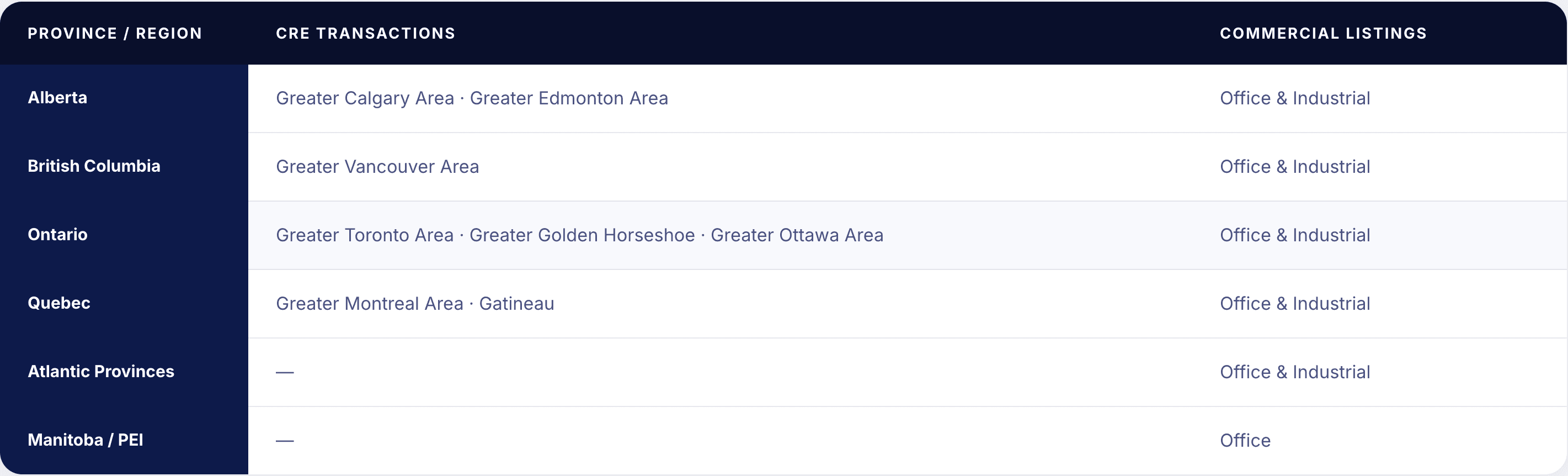
Commercial sales and transaction records validated by local market experts, across the Greater Toronto Area (GTA), Vancouver, Calgary, Edmonton, Greater Golden Horseshoe (GGH), Ottawa, Gatineau, and Montreal.
Cap rate, price per square foot, and financing structure details available on qualifying transaction records
Consistent market and submarket structure across provinces. Filter and compare across your portfolio markets without reformatting

The problem
Canadian CRE data gaps create underwriting risk
The decisions investors and lenders make about Canadian real estate, acquisitions, loan origination, portfolio monitoring, depend on transaction data that is often incomplete, inconsistent, or difficult to verify at the record level.

Comparable sales are hard to verify for Canadian assets
Unlike US markets where transaction data is more standardized, Canadian CRE comparable sales often require cross-referencing registry records, broker relationships, and proprietary sources, each with different levels of reliability.
Cap rate data is fragmented and inconsistently sourced
Cap rates are one of the most important metrics in CRE underwriting, and one of the hardest to verify in Canada. Survey-based estimates and broker opinions vary significantly from what verified transaction records show.

Monitoring market conditions across a portfolio is manual
Tracking vacancy, pricing trends, and transaction activity across multiple Canadian markets requires checking multiple sources with inconsistent classification systems and update cadences, before any analysis begins.
How it helps investors & lenders
Three capabilities for more informed decisions
Each one maps to a specific point in an investor or lender's assessment process, from initial market sizing to ongoing monitoring.
01
Transaction records for benchmarking and underwriting
Search the transactions catalog for comparable commercial sales by market, submarket, product type, and date range. Records include details like sale price, price per square foot, product type, and building size. Where available, cap rate and financing structure are also included, useful for grounding asset valuations and underwriting assumptions in verified market data.
WORKFLOW MOMENT
Acquisition underwriting and collateral assessment, replacing informal market estimates with verified transaction records
02
Pricing and cap rate trends over time
Use the commercial listings catalog to track vacancy and availability trends in the markets where your assets or collateral are located. Filter by submarket and product type to monitor whether supply conditions are improving or deteriorating, relevant for both hold/sell decisions and ongoing loan portfolio monitoring.
WORKFLOW MOMENT
Investment memos and lender risk assessment, demonstrating market trend context behind a specific asset's pricing
03
Market condition monitoring
Use the commercial listings catalog to track vacancy and availability trends in the markets where your assets or collateral are located. Filter by submarket and product type to monitor whether supply conditions are improving or deteriorating, relevant for both hold/sell decisions and ongoing loan portfolio monitoring.
WORKFLOW MOMENT
Portfolio monitoring and covenant review, tracking market conditions that affect asset or collateral performance
Inside a transaction record
The fields that matter for financial analysis
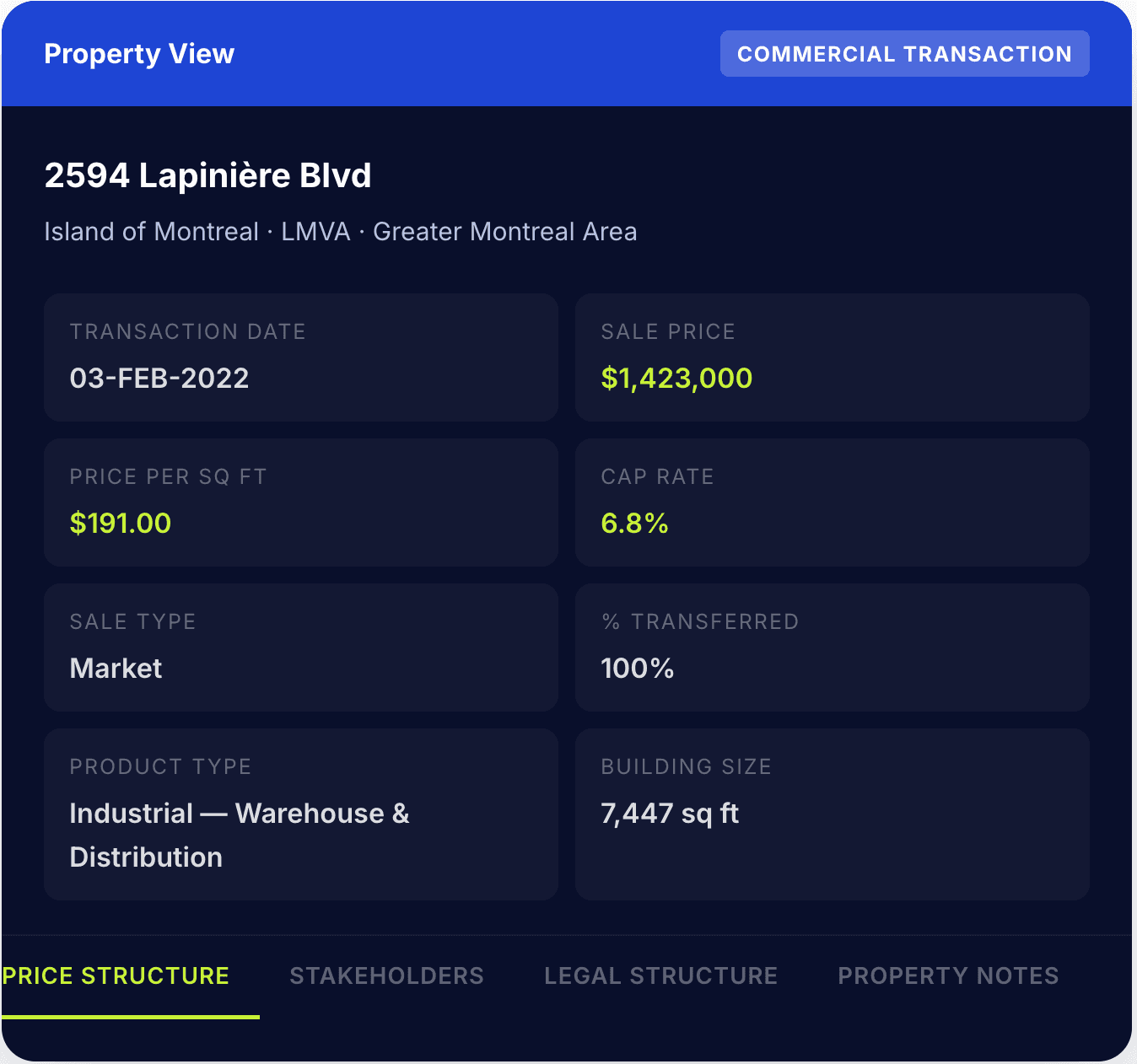
A Data Studio transaction record draws from multiple sources and is reviewed by local market experts. Depending on the record, you may find details like:
Sale price and price per square foot
Cap rate (where available, sourced from verified market data)
Financing structure: cash, assumed, vendor-take-back (where available)
Primary lender (where available)
Percentage of interest transferred
Sale type: market, distress, estate
Product type, building size, construction year, tenancy type
Market and submarket
Market coverage
Where transaction data is available
Sales transaction data covers the major Canadian markets where institutional investment and commercial lending activity is most concentrated.
What our customers say
Decisions made with better market data
From organizations using Altus Data Studio to support investment and advisory decisions in Canadian CRE.
" Altus Data Studio gives our team the transaction depth we need to advise clients confidently — we're not guessing at market direction, we're showing it with verified data behind every recommendation.

Colliers International
Commercial real estate services, Canada
" The quality of the comps data is what sets it apart. We used to spend hours verifying transactions from other sources — now that verification work is already done, and we trust what we're putting in front of clients.

Barbara Lawlor
President & CEO, Baker Real Estate Incorporated Baker RE
180K+
commercial transaction records in the database
50%+
reduction in time spent monitoring market trends
How investors & lenders use it
From comparable search to investment-ready analysis
A typical asset assessment session, from opening the platform to having market-grounded data for a memo or model.
Find comparable sales
Open the transactions catalog and filter by market, submarket, product type, and date range. Review available pricing, cap rate, and size details for sales near the subject asset.
Review pricing trends
Still in the transactions catalog, adjust your date range to observe how sale prices and available cap rates have moved over time in the target market and product type.
Check market conditions
Switch to the commercial listings catalog. Filter by your target submarket and product type to review current vacancy and availability, context for assessing demand conditions around the asset.
Export for your memo or model
Export the relevant transaction records and listings data for use in an investment memo, underwriting model, or internal briefing. Data exports in a structured format from each catalog.
FAQ
Questions investors & lenders ask before booking a demo
These are the questions your sales contact will answer in the first call. Answered here so you can assess whether a demo is worth your time.
Which Canadian markets have commercial transaction data?
How reliable is the cap rate data — can I use it in an underwriting model?
Can I filter transaction data by date range to track pricing trends over time?
Is there an API option for integrating data into our own models or systems?
Looking for a different use case?
Data Studio is also built for three other teams in Canadian CRE.
See the transaction data for your portfolio markets
Book a demo and we'll walk through the records and coverage available for the Canadian markets you invest or lend in.