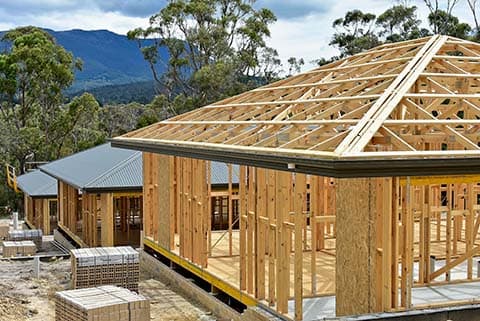
Five forces complicating development feasibility in 2026
Development feasibility is no longer just about testing the numbers. Five interconnected forces are reshaping what makes a project commercially viable.
Five forces complicating development feasibility in 2026
Development feasibility is no longer just about testing the numbers. Five interconnected forces are reshaping what makes a project commercially viable.
Author

Tim Peisley
Senior Trainer
Key takeaways
Development approval no longer creates value in isolation: with tens of thousands of approved but unbuilt homes sitting idle across Australia, the commercial challenge now begins where the planning process ends
The cheapest project to build is not always the cheapest project to own: for long-term holders, maintenance, durability, and operating costs influence asset value over decades and must be modelled from the outset
Capital structure, construction capability, and product strategy are no longer peripheral decisions but core variables determining whether a development project succeeds or fails
Modern feasibility is no longer a single-scenario calculation but a comparison of multiple futures, testing different financing structures, product mixes, and construction strategies simultaneously to identify the development project that is most likely to succeed
Development feasibility and managing a project budget has always been a balancing act. But as Altus Group’s latest Australian Construction Material Price Outlook notes, developers are operating in an environment of persistent cost escalation, labour shortages, declining productivity and regulatory change.
Construction cost escalation is forecast to range between 6.0% and 9.5% across Australia's major cities in 2026. But construction costs are only one variable.
Australian developers are trying to model a multi-dimensional moving target. Understanding what’s driving that change means looking at five unique forces, each capable of changing a project’s viability on its own, or shifting in tandem.
1. Development approval isn’t the prize it once was
Planning reform has made development approvals faster and more predictable, which benefits housing supply, but has eroded the scarcity value that approval once represented.
Developers traditionally had three exit points: acquire the site and hold it, secure a DA and sell, or build the project. Obtaining planning approval represented a significant uplift in value because it was difficult, time-consuming, and uncertain.
Historically, the phrase “shovel-ready” carried weight. Now, with so many sites approved, an uplift is no longer a guarantee. Here’s one example: the Hills Shire Council estimated around 17,000 approved homes in Sydney’s north-west had yet to commence construction in February 2026, with a further 5,700 approved homes awaiting delivery.
The planning hurdle has been cleared. The commercial hurdle remains.
2. Construction isn’t something to just procure
Rather than treating building as a separate service, more developers are bringing construction capability in-house, or at least closer through equity stakes or strategic partnerships.
A recent realestate.com.au article noted this trend, with one developer outlining the benefits: “Design, development and construction work together, allowing us to anticipate challenges early, streamline decisions and maintain tighter control over sequencing and procurement.”
The objective is to gain greater control over costs, reduce delivery risk, and retain more of the value created during delivery. Construction is no longer just part of the project, but part of the business model.
3. Today’s safest market may be tomorrow’s crowded one
Higher sale prices mean prestige apartments continue to stack up in markets where many other projects don’t. But success creates its own risk.
In March, the Property Council of Australia warned that, without significant intervention, luxury apartments could become one of the few product types still commercially viable in parts of Brisbane. If every developer reaches the same conclusion, competition inevitably follows.
Rather than asking ‘What is everyone building?’, developers need to consider ‘Who isn't being served?’.
Whether it’s downsizers wanting to stay in established suburbs, hybrid workers seeking different amenities, or buyers willing to pay for proximity to transport, the opportunity increasingly lies in understanding demand that others have overlooked.
4. Choosing a lender changes more than the interest rate
Australia’s private credit market is now estimated by ASIC to be worth around $200 billion, with approximately half focused on real estate lending.
Developers today can choose from an expanding range of banks, debt funds, and private credit providers with varying appetites for risk, pricing structures, and lending conditions.
That flexibility creates new opportunities, though ASIC's review of Australia’s private credit market highlights that new sources of capital carry their own risks, including practices such as “loan-to-own” structures, where debt arrangements easily convert into ownership if projects encounter difficulties.
Developers are not simply comparing interest rates. A different capital structure can alter pre-sale requirements, holding costs, project timing, risk allocation, and ultimately whether a development proceeds at all.
5. Fast doesn’t always create long-term value
Governments are investing heavily in modern methods of construction to deliver more housing, faster. The NSW Government’s budget allocation in June is a sign of the times: investment in manufacturing capability, planning reform, national certification, and industry grants.
But speed and lifecycle performance are two different measures of success, and the cheapest project to build isn’t always the cheapest project to own.
For long-term owners, including build-to-rent operators and community housing providers, the economics extend well beyond construction. Maintenance, refurbishment, durability, and operating costs all shape the value of an asset over decades.
A solution that appears compelling today may look very different after 30 years if those whole-of-life costs aren’t understood.
None of these forces operate independently. A change in capital structure affects pre-sale requirements and project timing. A change in product strategy affects costs, program, and demand. Neither decision can be made without factoring in the construction approach that connects them. What looks like five separate decision points is really one interconnected equation.
Not a calculation, but a constant pivot
Each individual force affects development, and must be considered in tandem with the other factors to unlock a competitive advantage:
Securing DA approval no longer creates value; turning an approved project into a profitable one is what counts;
Construction is no longer something to procure, but central to a business model;
Success is less about following the market than identifying demand others have overlooked;
Finance is no longer just about the cheapest loan, but choosing the capital structure that best fits the project; and
Delivering quickly is only part of the equation if the asset doesn’t perform over time.
These choices are complex and interdependent. The choice is no longer Option A or Option B. Change the capital structure, and you change the risk profile. Change the product, and you change costs, program, and demand. Change the delivery model, and you change all of the above.
Modern feasibility and development management is a multidimensional moving target that can’t be understood with static, single-scenario models. ARGUS EstateMaster allows users to compare multiple scenarios side-by-side, testing different financing structures, product mixes, construction strategies, and market conditions from project inception to completion.
With ARGUS EstateMaster, developers can move beyond the one-dimensional question: Does this project stack up? And instead ask the multi-dimensional question: Which project should we build?
Frequently asked questions
Why is development approval no longer a reliable source of value for Australian developers?
Planning reform has made approvals faster and more predictable, which benefits housing supply but has eroded the scarcity value that approval once represented. With an estimated 17,000 approved but unstarted homes in Sydney's north-west alone as of early 2026, holding an approved site is no longer a competitive advantage in itself.
How is private credit changing development feasibility in Australia?
Australia's private credit market is estimated at around $200 billion, with roughly half focused on real estate. The expanding range of lenders brings flexibility but also new risks, including loan-to-own structures that can convert debt into ownership if a project encounters difficulty. Capital structure decisions now affect pre-sale requirements, holding costs, project timing, and risk allocation, not just the interest rate.
What is the risk of targeting prestige or luxury apartment markets in Australia?
Higher price points have kept prestige apartments commercially viable where other product types aren't stacking up. But concentrated developer interest in the same segment creates its own risk: when every developer reaches the same conclusion, competition follows. The opportunity increasingly lies in identifying underserved demand rather than following the market.
Why should developers consider whole-of-life costs rather than construction costs alone?
The cheapest project to build is not always the cheapest project to own. For long-term holders, including build-to-rent operators and community housing providers, maintenance, durability, refurbishment, and operating costs shape asset value over decades. A delivery solution that appears compelling today may look significantly different after thirty years if lifecycle costs are not modelled from the outset.
How should development feasibility be approached differently in today's environment?
Static, single-scenario modelling is no longer sufficient. Because planning, finance, construction, product strategy, and market demand are shifting simultaneously and interdependently, feasibility now requires comparing multiple scenarios side by side. Changing the capital structure changes the risk profile; changing the product changes costs, program and demand; changing the construction approach changes all of the above.
Want to be notified of our new and relevant CRE content, articles and events?
Disclaimer
This publication has been prepared for general guidance on matters of interest only and does not constitute professional advice or services of Altus Group, its affiliates and its related entities (collectively “Altus Group”). You should not act upon the information contained in this publication without obtaining specific professional advice.
A number of factors may influence the performance of the commercial real estate market, including regulatory conditions and economic factors such as interest rate fluctuations, inflation, changing investor sentiment, and shifts in tenant demand or occupancy trends. We strongly recommend that you consult with a qualified professional to assess how these and other market dynamics may impact your investment strategy, underwriting assumptions, asset valuations, and overall portfolio performance.
No representation or warranty (express or implied) is given as to the accuracy, completeness or reliability of the information contained in this publication, or the suitability of the information for a particular purpose. To the extent permitted by law, Altus Group does not accept or assume any liability, responsibility or duty of care for any consequences of you or anyone else acting, or refraining to act, in reliance on the information contained in this publication or for any decision based on it. The distribution of this publication to you does not create, extend or revive a client relationship between Altus Group and you or any other person or entity. This publication, or any part thereof, may not be reproduced or distributed in any form for any purpose without the express written consent of Altus Group.
Author
Tim Peisley
Senior Trainer
Resources
Latest insights