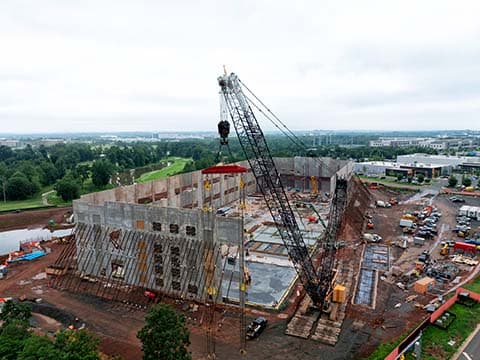
Ever consider the powerful value a commercial real estate appraisal provides?
When buying, selling, investing in, lending to, refinancing or insuring properties that are worth many millions of dollars, the property valuation report can make or break a deal.
Having a reliable, top quality commercial appraisal puts power in your hands. It clarifies and enhances information, reduces risk and ultimately contributes to successfully completing a wide range of real estate transactions.
When renewing a mortgage on a property for example, with a timely, accurate appraisal in hand, a borrower can negotiate with a variety of lenders for the best financing terms. A poor quality appraisal can do the opposite.
Deals can fail because a valuation is not completed on time or is prepared incompletely or incorrectly. If a property owner requiring financing for example, provides a lender with a commercial building valuation that does not include sufficient analysis or detail to meet the lender’s requirements, the loan application could be turned down.
To ensure you wield a powerful tool for your next commercial real estate transaction, consider the following three questions, which can serve as a guideline for discussions with a prospective appraiser.
1. To successfully complete a transaction, what features of an appraisal are most important?
Every appraisal is specifically targeted to the requirements of a particular project. The type of asset to be valued and the intended use of the appraisal determine the work that needs to be undertaken, the level of detail and analysis required and the type of report that is necessary to present the market value estimate. Along with this focused approach, quality appraisals also feature the following fundamental characteristics.
Accuracy
An appraiser should be able to provide a factual, unbiased valuation based on assessing property characteristics, sales data and other information. Since better data leads to more accurate appraisals, it’s helpful to determine how an appraiser accesses in-depth market research and comparable property data to arrive at the most precise valuation of a property.
Compliance
With professional valuation standards is essential to providing high quality commercial real estate appraisals. The Appraisal Institute of Canada (AIC) is the country’s most widely accepted national real estate appraisal organization. Appraisers who are accredited members of the AIC are required to provide services in compliance with the Canadian Uniform Standards of Professional Appraisal Practice (CUSPAP). These exacting standards set out procedures for developing and communicating an appraisal and ethical rules for appraisal practice.
Consistency
Amid constant, rapid change in the real estate industry, consistency is essential for valuation accuracy and quality. An appraisal company’s internal processes should support best practices and efficient processes that contribute to meticulous, cost-effective valuations of consistent quality.
Timeliness
The due diligence period for real estate transactions such as agreements of purchase and sale and financing approvals, are typically tight – often only 30 to 90 days. It can be critical that an appraisal is completed on time. An appraisal company needs to have fast turnaround capabilities for completing valuations when needed.
2. What information should the property valuation report include?
At the conclusion of a property appraisal, the appraiser delivers a written report. This will vary in type, format, length and content according to the requirements of the project. Accordingly, a commercial real estate appraiser may choose to prepare one of two report formats: full narrative or short narrative. Regardless as to which format is used, the final report should include all of the key elements and steps involved in the valuation. It should be clear, consistent and easy to understand with sufficient analysis and detail, including the following.
Purpose of the appraisal
Type of value estimated and a definition of this value
Description of the physical property and relevant rights
Factors that currently have or may be expected to have an effect on the value of the property
Underlying assumptions and conditions
Approaches to value that were applied, including calculations for each value estimate
Correlation and reconciliation of these estimates
Final estimate of value
Supporting descriptive and statistical data
3. What are the most important attributes to consider when hiring a commercial real estate appraisal company?
The quality of an appraisal can vary significantly depending upon how well the qualifications, experience and capabilities of an appraisal company match the requirements of a project. Before hiring, it’s helpful to have a phone conversation with a prospective appraiser and explore the following issues.
Relevant experience: Because of the complexity and value of many real estate transactions, it’s important to clarify who will actually perform the appraisal. The individual who conducts the appraisal should have the requisite qualifications and experience for the specific type of property and its relative complexity.
Market knowledge: An appraiser’s experience and understanding of market conditions are important factors in interpreting property value. With real estate transactions often spanning borders in today’s global environment, knowledge of local, regional and national markets is an important advantage.
Access to comprehensive real estate databases: Inquire about the company’s data sources. Property analysis must be based on current, accurate data. A valuator needs access to a comprehensive database of market conditions and property-level data that facilitates timely, complete analysis. In-house proprietary databases for example, can often supply comprehensive information and analytics results rapidly and efficiently.
Best practices: Standards and best practices for property valuations, such as the Canadian Uniform Standards of Professional Appraisal Practice (CUSPAP) and the RICS Valuation – Professional Standards, which are internationally recognized quality control standards for property valuations, continually evolve and improve. This is why it is important to determine what protocols and processes a company has in place to ensure appraisers follow the most up-to-date and effective practices.
Professional credentials: Check to ensure the appraiser who will perform the valuation has the relevant certification so you can be confident they follow the appropriate standards and practices. Professional designations include Canadian Residential Appraiser (CRA) and Accredited Appraiser Canadian Institute (AACI), which are licensed by the Appraisal Institute of Canada.
Pre-approved, when required: If a valuation is required by a lender, be sure to determine if the company is on the lender’s list of approved appraisers. If a borrower submits a report by an appraisal company that is not on this list, the lender may not accept the valuation.
Helpful follow up support: An appraisal doesn’t end with the submission of a valuation report. The appraisal company should be willing to discuss their opinion and value conclusions with you and any other parties involved to ensure that all questions or concerns are fully addressed.
An interest in and understanding of the assignment: When discussing a potential project, along with answering your questions, an appraiser should reciprocate with pertinent inquiries: describe the property. Where is it located? Why are you buying/selling/refinancing? Do you have a lender in place? What’s the leasing situation? This kind of exploration indicates an interest in your expectations and needs.
Ultimately, a commercial property appraisal is intended to solve real estate problems, help individuals make informed investment decisions and facilitate sound transactions.
Conducting your own due diligence helps to ensure that you work with the right company – one that puts the full power of an appraisal in your hands.
Author

Fraser Dyer
Sr Director & General Manager
Author
Fraser Dyer
Sr Director & General Manager
Resources
Latest insights