
2026 Canadian construction cost guide
Your guide to understanding Canadian real estate development and infrastructure construction costs.
Construction costs recalibrate as structure pressures reshape the landscape
Over the past two years, construction costs across Canada settled at a new baseline following a period of sharp inflation and supply chain disruption, but stability hasn't meant certainty.
The outlook heading into 2026 is cautiously optimistic, with optimism building toward 2027. Stabilizing interest rates and gradually improving financing conditions are expected to support a measured recovery in private-sector activity, and public-sector infrastructure and institutional investment will remain a primary driver in many regions. But cost dynamics are increasingly shaped by structural factors like: labour availability, regulatory complexity, trade policy, and geopolitical conditions, rather than traditional escalation drivers alone. These forces will play an increasingly important role in determining project viability and pricing across the Canadian market through 2026 and beyond.
What’s inside
Private sector development costs
Public sector development costs
Infrastructure construction costs
What’s driving Canadian construction costs in 2026?
Construction costs in Canada in 2026 are driven primarily by structural conditions rather than traditional escalation. Labour availability, regulatory and permitting complexity, trade and tariff policy, and the pace of interest-rate normalization are the main forces shaping project pricing and viability. Public-sector infrastructure and institutional investment remain the most consistent sources of activity, while a private-sector recovery depends on continued improvement in financing conditions.
These dynamics play out differently across markets and building types, which is why the guide reports costs by local market and asset class — and why many teams pair it with development advisory and cost management support. For a fuller read on the year ahead, see our Cost Guide insights for 2026, or what regional data reveals about Canada’s 2026 outlook.
2026 Canadian Cost Guide data is based on our proprietary project cost data base, including:
$573B
total project value
6,652
projects
1,632M+
square feet
How to use the Cost Guide
Every year this guide provides a comprehensive snapshot of construction costs in local markets across Canada, broken down by building type. This data has proven very useful; however, if improperly applied, it can result in a budget and forecast that is off by hundreds of thousands, and in some cases, millions of dollars.
To avoid any inaccuracies, there are two recommended ways to use this guide:
1. Preparing a high-level estimate
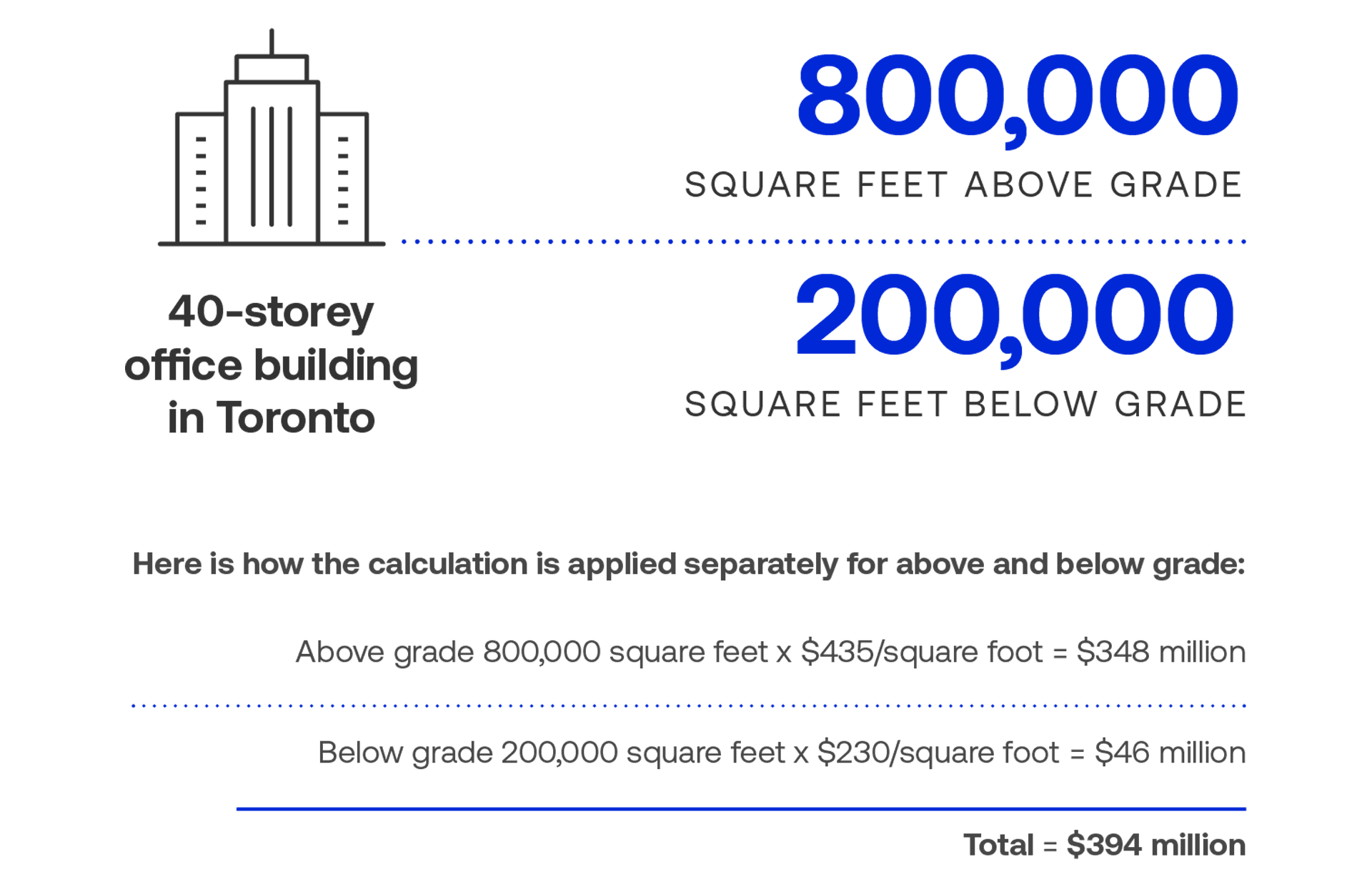
If you are in the pre-planning stage and know your floor areas, you can use the guide to prepare a high-level estimate. Using the Private Sector price per square foot data, it’s relatively simple, as illustrated in this example.
That said, even for a high-level estimate, you should also be accounting for construction cost escalation between the date of this guide and your project’s construction start date. When establishing your cost escalation rate, be sure to consider factors that may influence the rate of change, such as your region and your asset type.
2. As a benchmark

Frequently asked questions
What is the Altus Group Canadian Cost Guide?
How often is the Canadian Cost Guide updated?
What construction costs does the guide cover?
What is the outlook for Canadian construction costs in 2026?
Resources
Latest insights